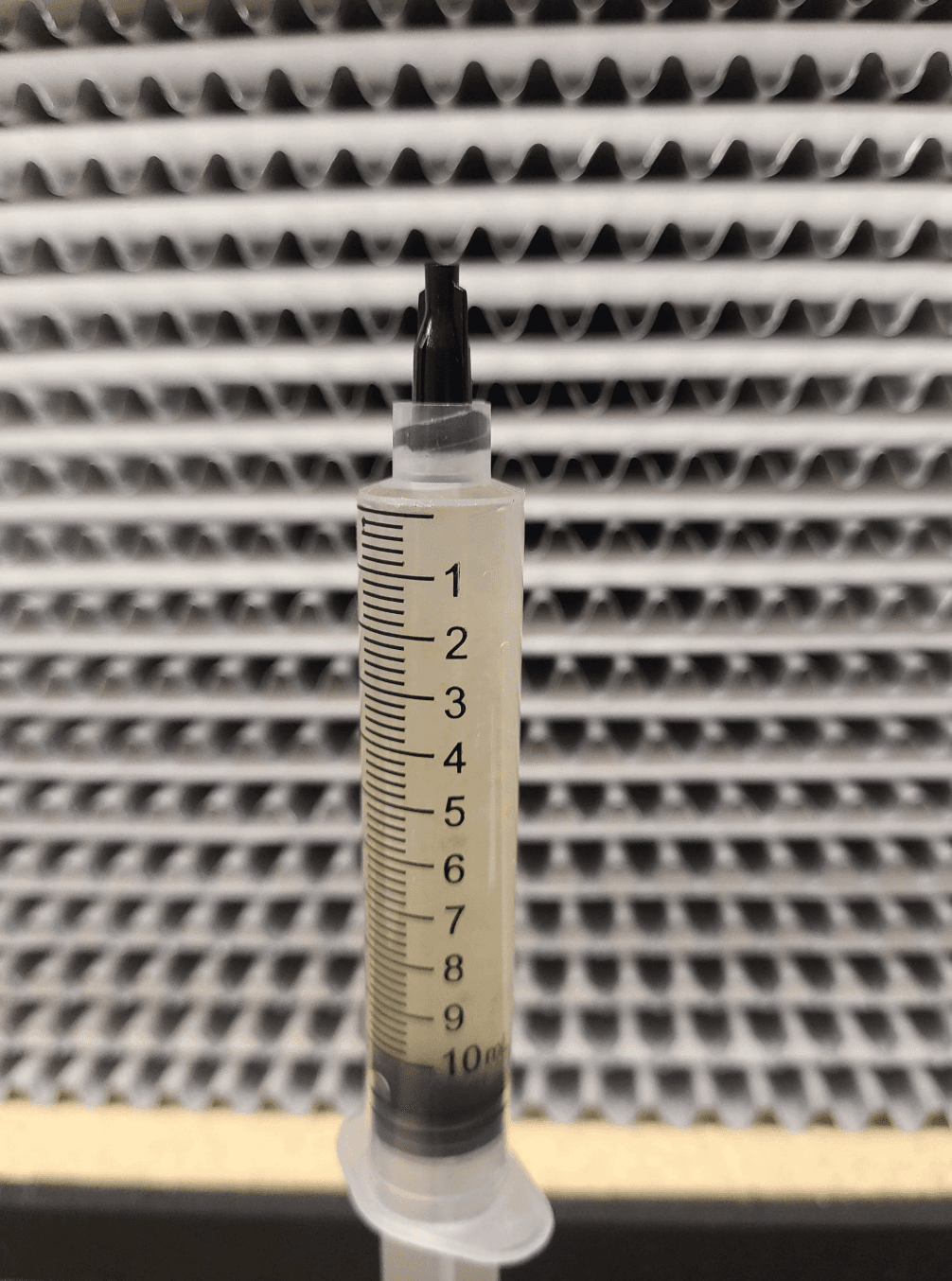
Blue Meanie Liquid Culture Syringe 10cc
$22.99
Add Quantity To Cart →
Description
Blue Meanie
Scientific / Taxonomic Identity
- Blue Meanie is often used to refer to Panaeolus cyanescens (also called Copelandia cyanescens) in many communities.
- It is a psilocybin-containing species in the Bolbitiaceae family.
Appearance & Characteristics
- The caps are relatively small (often a few centimeters across), starting hemispheric or convex, flattening with age.
- Caps are light brown when moist, fading toward off-white or grayish hues as they dry. They can sometimes crack in dry weather.
- Gills are close together, initially gray, darkening as spores mature, with white edges.
- The stipe (stem) is slender, roughly 6-12 cm long and a few mm thick in many specimens, showing blue staining (“bruising”) when handled or damaged.
Psychoactive & Effects
- Contains psilocybin and psilocin (the active hallucinogenic compounds).
- Known for being relatively potent among psilocybin mushrooms; reports suggest strong visual and perceptual effects, often more intense than many Psilocybe cubensis (cube) strains. Community sources tend to highlight the richness of visual detail, color intensification, faster onset, and sometimes shorter duration compared to some “cube” strains. (Note: exact potency numbers are usually not well established or consistent.)
Habitat & Growth Conditions
- Naturally found in tropical to subtropical climates. It typically grows in dung-enriched soils or on decaying organic matter, often in grasslands.
- Fruiting tends to occur under warm, humid conditions with moisture cycles (rain then drying) that trigger fruiting flushes.
Cultural / Community Notes
- “Blue Meanie” is a popular name; sometimes confused with or used interchangeably for different species or variants depending on region. People using the name may mean Panaeolus cyanescens or even certain stronger Psilocybe cubensis phenotypes.
- Often prized for its stronger effects, shorter time to onset, and more intense visual effects compared to “standard” cube strains.